Showing posts with label an. Show all posts
Showing posts with label an. Show all posts
Friday, August 25, 2017
Bilski and Biotechnology An Update
Bilski and Biotechnology An Update
A host of amicus briefs critical of the Federal Circuits "machine-transformation" test for patent eligibility, as recently set forth in the courts en banc Bilski decision, will be filed this week with the US Supreme Court. Some of these briefs reflect concerns of biotechnology industry, particulary with respect to patentability of diagnostics and personalized medicine, I will post some of these briefs as they become available to me. Briefs supporting affirmance of Bilski will be filed later this summer.
In the meantime, those interested in some of my thoughts on the subject might want to check out an article I recently posted on SSRN, you should be able to access it at http://papers.ssrn.com/sol3/papers.cfm?abstract_id=1424493&download=yes, but if you have problems please let me know and I will get you a copy.
Available link for download

Thursday, April 20, 2017
Brainstorming Designing an Intelligent Transportation System ITS
Brainstorming Designing an Intelligent Transportation System ITS
Growth in congestion, as well as the difficulties in constructing new infrastructures has lead into a research in Intelligent Transportation System (ITS). The advances in sensing technologies, computer hardware and software, etc are also become additional motivation in this field of research. Automatic Highway System (AHS) is one of the most interesting topic. Its main idea: platooning is believed to be able to improve highway throughput without having to ignore the safety but instead improving it.
It is widely known that knowing the position and speed of the vehicles on the road network in real-time is one of the major challenges that vehicle control and traffic management applications are facing. Wireless Sensor Network (WSN) is considered as a potential technology that might be useful as an infrastructure component of an ITS since it received significant attention in the last decade and successful research put them in the forefront to answer this challenge. WSN itself is an exciting technology with unlimited potential for numerous application, including tracking, monitoring, and controlling.
A distributed paradigm is the most suited approach to implements an ITS. While it is naturally distributed (spatially) and consisted of various components, which may range from several to thousands number of components (scalability issue), it is also relatively complex. Not to mention that by distribute the implementation accordingly, a certain level of reliability could be achieved more easily. Dynamic components in ITS are implemented as agents. Instead of rely heavily in modeling the process, agent-oriented paradigm offers a higher abstraction compared to the object-oriented paradigm. Agent is an autonomous entity that behaves according to its perception of the environment and its knowledge. In most cases, one agent is not enough to form the expected system. Therefore, a Multi-Agent System (MAS) is required.
Since there is no formal method to test a distributed system, the only way to do it is by using a simulation. An engine that capable of simulating any dynamic behaviors is required. Using multi-agent approach as it concept, a researches is allowed to decomposed a big system into intelligent entities with specified behaviors. In a traffic system problem domain, some entities could be considered as agents: car, driver, traffic controller, etc depending on the modelers themselves.
The simulation of an ITS system might not be complete without the introduction of human behaviors. However, human behaviors may vary for each individual or culture. Investigating the difference in culture might be interesting not only in describing the human part of the system but also to parameterize some characteristics of controllers.
It is widely known that knowing the position and speed of the vehicles on the road network in real-time is one of the major challenges that vehicle control and traffic management applications are facing. Wireless Sensor Network (WSN) is considered as a potential technology that might be useful as an infrastructure component of an ITS since it received significant attention in the last decade and successful research put them in the forefront to answer this challenge. WSN itself is an exciting technology with unlimited potential for numerous application, including tracking, monitoring, and controlling.
A distributed paradigm is the most suited approach to implements an ITS. While it is naturally distributed (spatially) and consisted of various components, which may range from several to thousands number of components (scalability issue), it is also relatively complex. Not to mention that by distribute the implementation accordingly, a certain level of reliability could be achieved more easily. Dynamic components in ITS are implemented as agents. Instead of rely heavily in modeling the process, agent-oriented paradigm offers a higher abstraction compared to the object-oriented paradigm. Agent is an autonomous entity that behaves according to its perception of the environment and its knowledge. In most cases, one agent is not enough to form the expected system. Therefore, a Multi-Agent System (MAS) is required.
Since there is no formal method to test a distributed system, the only way to do it is by using a simulation. An engine that capable of simulating any dynamic behaviors is required. Using multi-agent approach as it concept, a researches is allowed to decomposed a big system into intelligent entities with specified behaviors. In a traffic system problem domain, some entities could be considered as agents: car, driver, traffic controller, etc depending on the modelers themselves.
The simulation of an ITS system might not be complete without the introduction of human behaviors. However, human behaviors may vary for each individual or culture. Investigating the difference in culture might be interesting not only in describing the human part of the system but also to parameterize some characteristics of controllers.
Related Posts
- Automatic Highway System (AHS)
- Wireless Sensor Network and Intelligent Transportation System
Available link for download
Wednesday, March 22, 2017
Borat is an X rated Yackoff Smirnoff
Borat is an X rated Yackoff Smirnoff
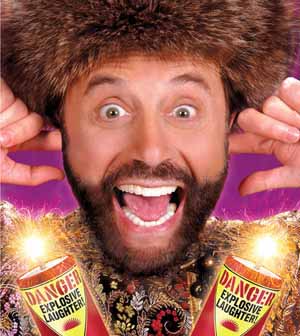 As much as Ubsey enjoys the many rantings of Ali Gs Borat character, he really seems like Yackoff Smirnoff plus a few sex jokes. That being said, he is much funnier than Yackoff ever was in the 80s...Here is Borat this weekend on Saturday Night Life and keep your eye on Borat in this 2nd clip:
`
`
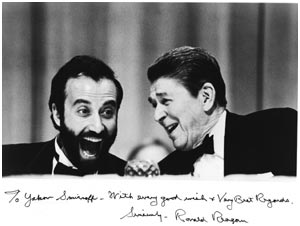
"America, what a country, I love it!!"
Available link for download
Saturday, February 11, 2017
Bowman v Monsanto An Important Case for Agricultural Biotechnology
Bowman v Monsanto An Important Case for Agricultural Biotechnology
The Supreme Court recently granted certiorari in Bowman v. Monsanto, an important case for agricultural biotechnology. If the Supreme Court decides to overrule the Federal Circuits decision in favor of Monsanto, it could seriously impact the ability of agricultural biotechnology companies to recoup their investment in developing traits for seeds that farmers can harvest and replant, such as soybeans.
Prior to agricultural biotechnology, there was little incentive to invest in the development of improved seeds, since farmers have historically been able to save and replant second-generation seeds, preventing seed innovators from recouping the value they create in their seeds. The exception has been hybrid corn, which cannot be saved for replanting without losing beneficial characteristics of the hybrid, effectively forcing farmers to buy new seed each year. This natural technological restriction on seed saving encouraged investment by seed companies such as Pioneer in the development of improved strains of hybrid corn.
In the 1990s scientists at USDA and Delta Pine Land, a cotton biotechnology company subsequently purchased by Monsanto, developed genetic use restriction technology (GURT). GURT allows for the production of seeds that germinate and produce second-generation seeds, but those second-generation seeds are sterile. In effect, this would allow a seed company like Monsanto to impose a technological restriction on the ability of farmers to save and replant seeds, analogous to the inherent restriction on the replanting of hybrid corn. It would also allay concerns that genetically modified crops might escape into the environment and cause environmental harm. However, anti-biotechnology activists learned of GURT and dubbed it "Terminator" technology, and made it a public relations disaster for agricultural biotechnology, and particularly Monsanto. Agricultural biotechnology companies like Monsanto have not used GURT in their products, but have instead relied upon patents to prevent farmers from saving and replanting seeds. In 1999, Monsanto pledged not to use GURT in its products.
Instead, Monsanto has relied upon patent and contract law to prevent replanting of second-generation patented seeds. Basically, purchasers of seeds containing a patented Monsanto trait, such as Roundup Ready soybean, are required to sign a contract agreeing not to save second-generation seeds for replanting. Farmers are of course able under the contract to harvest the seeds for use as food or feed. A number of farmers challenged the enforceability of this system on a variety of grounds, but in 2002 and 2006 the Federal Circuit issued decisions upholding the validity of the arrangement in Monsanto v. McFarling and Monsanto v. Scruggs, respectively. In those cases, the farmer saved and replanted seeds harvested from their own fields, which the Federal Circuit held to constitute infringement of Monsantos patents.
In 2008, the Supreme Courts decision in Quanta v. LG Electronics cast some doubt on the ability of Monsanto to use patents to prevent replanting of second-generation seeds. In Quanta, the Supreme Court overturned the Federal Circuits decision that patent owners could place conditions on sales, and held that the authorized sale of a patented product exhausts patent rights in the product. Arguably, Quanta could be interpreted as precluding Monsanto from claiming patent rights in the progeny of seed that had been the subject of an authorized sale, as discussed in a previous post.
In Monsanto v. Bowman, the Federal Circuit held that even post-QuantaMonsanto was not barred by the first sale doctrine from enforcing its patents against farmers who save and replant second-generation seeds. Vernon Bowman is a soybean farmer, and for years he has purchased and planted Roundup Ready soybean, and signed the agreement not to replant. However, he later began purchasing commodity soybeans from a grain elevator that he knew probably were Roundup Ready, planting those seeds, and then harvesting and replanting some of the second-generation seeds grown in his field. He apparently believed that since he did not sign agreement with respect to commodity seeds he was not barred from replanting them. He sprayed the soybeans twice during the season with Roundup, demonstrating that not only did he know that the seeds are Roundup Ready, but also that he was using the glyphosate-resistance properties of the plants.
The Federal Circuit rejected Bowmans argument that his activities were protected by the first sale doctrine. The court held that his purposeful planting and growing of the second-generation seeds constituted more than simply "using” the patented seed, but impermissibly "making" patented product in violation of Monsantos patent.
In his petition for certiorari, Bowman argues that the ability to make second-generation seed is an inherent characteristic of seeds, and that his natural and foreseeable use of the seeds to produce second-generation seeds is permitted under the first sale doctrine, regardless of whether he sells the seed for use as feed or replants it.
The US solicitor general was invited to file Amicus brief in the case, and did so, advising the Supreme Court not to grant certiorari. The solicitor general agreed with Monsanto and the Federal Circuit that the first sale doctrine under Quanta does not extend to second-generation seed. The Federal Circuit and solicitor general recognize that the interpretation of the first sale doctrine advocated by Bowman would severely limit the ability of biotechnology companies like Monsanto to recoup their sizable investment in developing agricultural traits.
The grant of certiorari is presumably cause for great concern to Monsanto and other agricultural biotechnology companies selling patented seed that can be saved and replanted. In recent years, when the Supreme Court has granted certiorari in patent cases it has tended to reverse the Federal Circuit, for example in Prometheus, Quanta, KSR, Bilski and Festo. Because the Federal Circuit is generally the only Court of Appeals to decide patent cases, Supreme Court normally does not accept patent cases to resolve split between the circuits. The fact that it took the case suggests to me that at least some Justices question the Federal Circuits decision in Monsanto v. Bowman. Of course, that does not necessarily mean the Court will reverse. For example, in LabCorp v. Metabolite (2006) the Supreme Court dismissed a petition for certiorari as improvidently granted, although three of the justices filed a dissent indicating they would have decided the case and overruled the Federal Circuits decision.
Supporters of Bowman argue that they Federal Circuits decision will end the long-standing practice of farmers saving and replanting seeds, and of grain elevator selling commodity seeds. They point out that today most of the soybeans collected by grain elevators and sold as commodity seeds contain the patented Roundup Ready trait, since most farmers are planting Roundup Ready soybeans. However, in this case Bowman clearly knew that the seeds he planted were Roundup Ready, since he sprayed the fields repeatedly with Roundup, which he would not have done if he thought he had planted non-glyphosate resistant seeds. I very much doubt whether Monsanto has sued any farmer who bought commodity seeds that happened to include the Roundup Ready trait, but who did not take advantage of the patented trait by using Roundup on his fields. Such a case of inadvertent infringement would clearly raise substantial policy issues, but those are not the facts of this case.
If the Supreme Court reverses the Federal Circuit and holds that companies like Monsanto cannot use their patents to prevent replanting a second-generation seeds, it would be analogous to interpreting the first sale doctrine in copyright as permitting anyone who buys a CD or DVD to make unlimited copies and sell those copies. Clearly the first sale doctrine does not go that far in copyright, and I dont think it should go that far in patent law with respect to self-replicating technologies like seeds. I dont think a farmer who innocently plants commodity seeds that happen to contain the patented Roundup Ready trait, and who does not take advantage of that trait by using Roundup on his fields, should be liable for patent infringement. But I dont think a farmer should be able to take advantage of the first sale doctrine to purposely acquire and grow patented seeds, benefit from the Roundup ready characteristics by using Roundup on the crops, and then use the first sale doctrine as a defense.
If the Supreme Court sides with Bowman in this case, Im not sure what Monsanto and other agricultural biotechnology companies will do. They might have to alter their licensing practices, as discussed in a previous post. Perhaps they will have to reconsider the use of GURT or some other technological solution in lieu of patents.
Available link for download
Subscribe to:
Posts (Atom)