
| Story (Plot) | ||||
| Bruce Lee movie Story is coming Soon... | ||||
Showing posts with label v. Show all posts
Showing posts with label v. Show all posts
Monday, August 14, 2017
BIO and PhRMA File Amici Brief Urging En Banc Reconsideration of Ariosa v Sequenom
BIO and PhRMA File Amici Brief Urging En Banc Reconsideration of Ariosa v Sequenom
The Biotechnology Industry Organization (BIO) and the Pharmaceutical Research and Manufacturers of America (PhRMA) have jointly filed an amici brief curiae brief urging the Federal Circuit to grant en banc rehearing of Ariosa v. Sequenom. The brief is available here. I am the counsel of record.
BIO and PhRMA are concerned that the development and commercialization of a range of biotechnology and pharmaceutical innovations will be impeded if the Federal Circuit does not address the mounting uncertainty currently afflicting patentable subject matter jurisprudence. The brief points out the critical importance of effective patent protection for biotechnology and pharmaceutical innovators, and the current unprecedented level of uncertainty with respect to the scope of patent eligible subject matter. This uncertainty is affecting both the patent user community and the PTO, which has responded with an ongoing stream of revised and re-revised non-final and interim guidance documents. With each new PTO Guidance, BIO members have observed an increasing rate of claim rejections, affecting a diverse range of biotechnology, including novel antibiotic molecules, industrial enzymes, diagnostic processes, and crop production products.
The unsettled state of the law has also created doubt as to whether issued patents will be able to withstand challenge. The brief points out that the vast majority of judicial decisions addressing patent eligibility under the recently articulated standards have resulted in a determination of ineligibility. For example, Appendix 3 of the recent PTO “July 2015 Update: Subject Matter Eligibility,” identifies 24 post-Mayo subject matter eligibility cases decided by the Federal Circuit, of which 22 held allof the challenged claims to be patent ineligible.
The brief urges the court to clarify the contours of both Step I and Step II of theMayo two-step test for patent eligibility. It posits that the Supreme Court would not have articulated a two-step test if it did not intend the first step to serve some meaningful gatekeeping function, but that under the standard applied by the panel it is difficult to see how any analytical or detection method would ever not satisfy Step I, so long as that method is designed to detect something that occurs naturally. With regard to Step II, the brief asks for clarification with regard to the proper application of the “inventive concept” and “preemption” standards of patent eligibility. As an example, the brief discusses the practical challenges facing the inventor of a new diagnostic test under the new patent eligibility jurisprudence.
In its recent decisions the Supreme Court apparently assumed the existence of limiting principles that would maintain patent eligibility for truly meritorious inventions (this was Judge Linn’s characterization of Sequenom’s claimed invention in his concurring opinion), even if that invention can be deconstructed into a combination of natural phenomena and conventional technology. The brief argues that en bancreconsideration would allow the Federal Circuit to address the nature of these limiting principles suggested in Mayo. Alternatively, if the court finds that Supreme Court precedent does not provide for limiting principles that provide a meaningful opportunity for patenting important biotechnology innovations, that would suggest a need for the Supreme Court to readdress the contours of patent eligibility in the context of biotechnology. Ariosa v. Sequenom would be an appropriate vehicle for alerting the Supreme Court to the urgent need for this clarification.
Available link for download
Brothers in Arms 3 v 1 4 4c MOD
Brothers in Arms 3 v 1 4 4c MOD

La aclamada serie de la Segunda Guerra Mundial vuelve cargada de acción, cámaras espectaculares e increíbles armas experimentales. Conviértete en el sargento Wright y experimenta una aventura dramática ambientada en los días posteriores al desembarco de Normandía.
Dirige a tu equipo de élite y usa sus habilidades especiales en el fragor de la batalla. ¡Mejora tus armas, las habilidades de tus compañeros y lucha de nuevo contra el enemigo!
VIVE UN COMBATE ÚNICO JUNTO A TU PELOTÓN
> ¡Utiliza el arsenal de tus hermanos para conseguir una ventaja táctica!
> Utiliza sus distintas habilidades: ataque aéreo, molotov, misil explosivo, fuego de mortero y muchas más.
> Desbloquea nuevos aliados. Conviértelos en soldados veteranos: potencia su daño, tiempo de recuperación de habilidades, aumenta sus PV, mejora las habilidades de área, y mucho más.
ZAMBÚLLETE EN UN SHOOTER CARGADO DE ACCIÓN EMOCIONANTE
> Acción a cubierto en 3.ª persona con movimiento libre.
> Varios tipos de misión, como asalto, francotirador, asedio y sigilo.
> Perspectivas impresionantes de las bajas enemigas.
ESCOGE TU ARMA FAVORITA
> Desbloquea nuevas armas y conviértelas en el arsenal definitivo con mejoras a la cadencia, retroceso, velocidad de recarga o de tamaño del cargador.
> ¡Descubre las revolucionarias armas experimentales y derrota a todo un ejército!
> Siembra el caos con sus habilidades increíbles: ¡Munición triple o infinita, descargas eléctricas y más!
EFECTOS VISUALES QUE TE ASOMBRARÁN
> Escenarios interiores y exteriores impresionantes.
> Variaciones meteorológicas y horarias.
> Gráficos dignos de consola para un juego de alta calidad.
CONSIGUE RECOMPENSAS GENIALES EN EVENTOS ESPECIALES
> La dificultad de las misiones aumenta de forma gradual para conseguir premios mejores.
> Eventos de tiempo limitado con botines exclusivos.
Mas Información y Descarga Desde Google Play
Qué hay de nuevo: v 1.4.4c
Bug Fixes Nada más
MOD:
-Armas libres
- Paquetes libres
- Consumibles libres
Actualizaciones gratuitas de Brother
- VIP gratis
Enlace Del Apk Desde Aquí
Enlace Alterno Del Apk Desde Aquí


Available link for download
Friday, August 11, 2017
BITTORRENTÂ PRO V 3 33 BUILD 242 CRACKED APK DOWNLOAD TORRENT ON ANDROID
BITTORRENTÂ PRO V 3 33 BUILD 242 CRACKED APK DOWNLOAD TORRENT ON ANDROID
BitTorrent® Pro v.3.33 build 242 cracked apk (download torrent on Android)

Bitorrent - Cari torrents dan download langsung ke ponsel atau tablet, AD-GRATIS, dengan resmi BitTorrent® Pro aplikasi untuk Android-sekarang dengan preferensi hemat baterai
Upgrade ke versi Pro dari aplikasi BitTorrent®, dari penemu protokol BitTorrent dan pengembang # 1 torrent aplikasi di Play Store Google * -dan # 1 bittorrent client di desktop worldwide.We tahu Anda menyukai media- dan bahwa Anda tidak ingin terikat ke desktop Anda untuk menikmatinya. Kami telah membuat torrent Android app ini berguna untuk membantu Anda mendapatkan media, di mana pun Anda berada.
Upgrade ke versi Pro dari aplikasi BitTorrent®, dari penemu protokol BitTorrent dan pengembang # 1 torrent aplikasi di Play Store Google * -dan # 1 bittorrent client di desktop worldwide.We tahu Anda menyukai media- dan bahwa Anda tidak ingin terikat ke desktop Anda untuk menikmatinya. Kami telah membuat torrent Android app ini berguna untuk membantu Anda mendapatkan media, di mana pun Anda berada.
Yang Baru / Whats new | Fitur / Feature :
- Choose your file download location when adding a torrent
- Download torrents and magnet links
- Choose between deleting torrents only, or torrents & files
- Translations in P??????, Español, Italiano, Português do Brasil
- The very latest in core torrenting technology, continuously updated by dedicated torrent core engineers to maximize performance
- Download licensed, free music and video torrents from BitTorrent’s content partners such as Moby and Public Enemy-- from the get-go.
- Downloaded more than one music file in a torrent? Play them all at once as a playlist
- Make your Android device so much more fun
- No banner ads.
- Battery Saver feature- suspends torrents when battery goes below a predefined level.
App By :
- BitTorrent, Inc.
Type APK :
- Paid
My Komentar :
Bittorrent Pro Di android WOHOoo...
How to install / Cara Install :
Klik link di sini >>> CARA INSTALL APK + OBB DATA DI ANDROID
Link Download :
- APK
- BITTORRENT® PRO V.3.33 BUILD 242 CRACKED APK | (13 MB) Via. Uploads
Author :
- DragonHaXing
Available link for download
Sunday, July 16, 2017
Bruce Lee 2017 Tamil Movie Story Release Date Star Cast Crew Budget Info G V Prakash Kumar Kriti Kharbanda
Bruce Lee 2017 Tamil Movie Story Release Date Star Cast Crew Budget Info G V Prakash Kumar Kriti Kharbanda
Bruce Lee is an 2017 Tamil (Kollywood) movie, G. V. Prakash Kumar, Kriti Kharbanda in lead roles. This film is Directed by Prashanth Pandiraj and Produced by Kenanya. It is made under the banner of Kenanya Films. The film is release on Jan 2017.
| First look Poster of Tamil movie Bruce Lee 2017 | ||||
 | ||||
| Status:- | Ready To Release | |||
|---|---|---|---|---|
| Updated:- | 2017 | |||
| Bruce Lee (2016) Tamil Movie | ||||
| Genre:- | action-comedy | |||
|---|---|---|---|---|
| Release Date:- | 13 Jan 2017 | |||
| Filmmakers | ||||
| Story/Writer by:- | Kenanya | |||
| Directed by:- | Prashanth Pandiraj | |||
| Producer by:- | Prashanth Pandiraj | |||
| Music by:- | G. V. Prakash Kumar | |||
| Cinematography:- | Shankar | |||
| Editing by:- | Ruben | |||
| Studio / Distributor:- | Kenanya Films | |||
| Language:- | Tamil | |||
| Budget | N/A | |||
| Also Check Out:- |
|---|
| Anushka Shetty Upcoming Movie List 2017 & 2018 |
| Shruti Haasan Upcoming Movies List 2017 & 2018 |
| List of Tamil Movies of 2017 & 2018 |
| Star-Cast & Role | ||||
| G. V. Prakash Kumar | --:as:-- | Gemini Ganesan/Bruce lee | ||
|---|---|---|---|---|
| Kriti Kharbanda | --:as:-- | Saroja devi/Saro | ||
| Rajendran | --:as:-- | N/A | ||
| Bala Saravanan | --:as:-- | N/A | ||
| Ramdoss | --:as:-- | N/A | ||
| Anandaraj | --:as:-- | N/A | ||
| Mansoor Ali Khan | --:as:-- | N/A | ||
| Trailer | ||||
| Bruce Lee (2017) Tamil Movie Official Trailer on Youtube video | ||||
| Music(Songs) | ||||
| S.No | Song Name | lyrics | Artis (Singer) | |
|---|---|---|---|---|
| 1. | Naan Thaan Goppan Da | Arunraja Kamaraj | Arunraja Kamaraj | |
| 2. | Sugar Mint-u Kari | Mani Kandan | G. V. Prakash Kumar, M. M. Manasi | |
| 3. | Sumar Moonji Kumaru | Gana Vinoth | Silambarasan | |
| Bruce Lee :- | Official External links:- |
|---|---|
| Page On wikipedia: | https://en.wikipedia.org/wiki/Bruce_Lee_(2016_film) |
| Also Check Out:- |
|---|
| Ravi Teja Upcoming Bruce Lee 2016 & 2017 |
| Shahrukh Khan Upcoming Movie List 2016 & 2017 |
| Salman Khan Upcoming Movie List 2016 & 2017 |
| Nayantara Upcoming Movies |
| Vijay Upcoming Movie |
| Top 10 Telugu Highest-Grossing Movies of All Time at Box office |
| Top 10 Telugu Highest-Grossing Movies of 2016 at Box office |
| Telugu Movies 2016 Box Office Collection (Hit or Flop) |
Available link for download
Sunday, July 9, 2017
Blood Pressure Diary Pro V 2 9 1 Apk Download
Blood Pressure Diary Pro V 2 9 1 Apk Download

Requirement: Android 2.3.3 and up
Description:
Blood Pressure Diary is a personal tool for tracking and analyzing blood pressure measurements. It helps people suffering from various diseases of the blood circulatory system, e.g., hypertension or hypotension. This app is very useful for early detection of predisposition to the corresponding diseases and as a tool for monitoring fitness activities.
DOWNLOAD LINKS:
Google Play Store: click here
Direct Download

Blood Pressure Diary is a personal tool for tracking and analyzing blood pressure measurements. It helps people suffering from various diseases of the blood circulatory system, e.g., hypertension or hypotension. This app is very useful for early detection of predisposition to the corresponding diseases and as a tool for monitoring fitness activities.
DOWNLOAD LINKS:
Google Play Store: click here
Direct Download
Available link for download
Wednesday, June 21, 2017
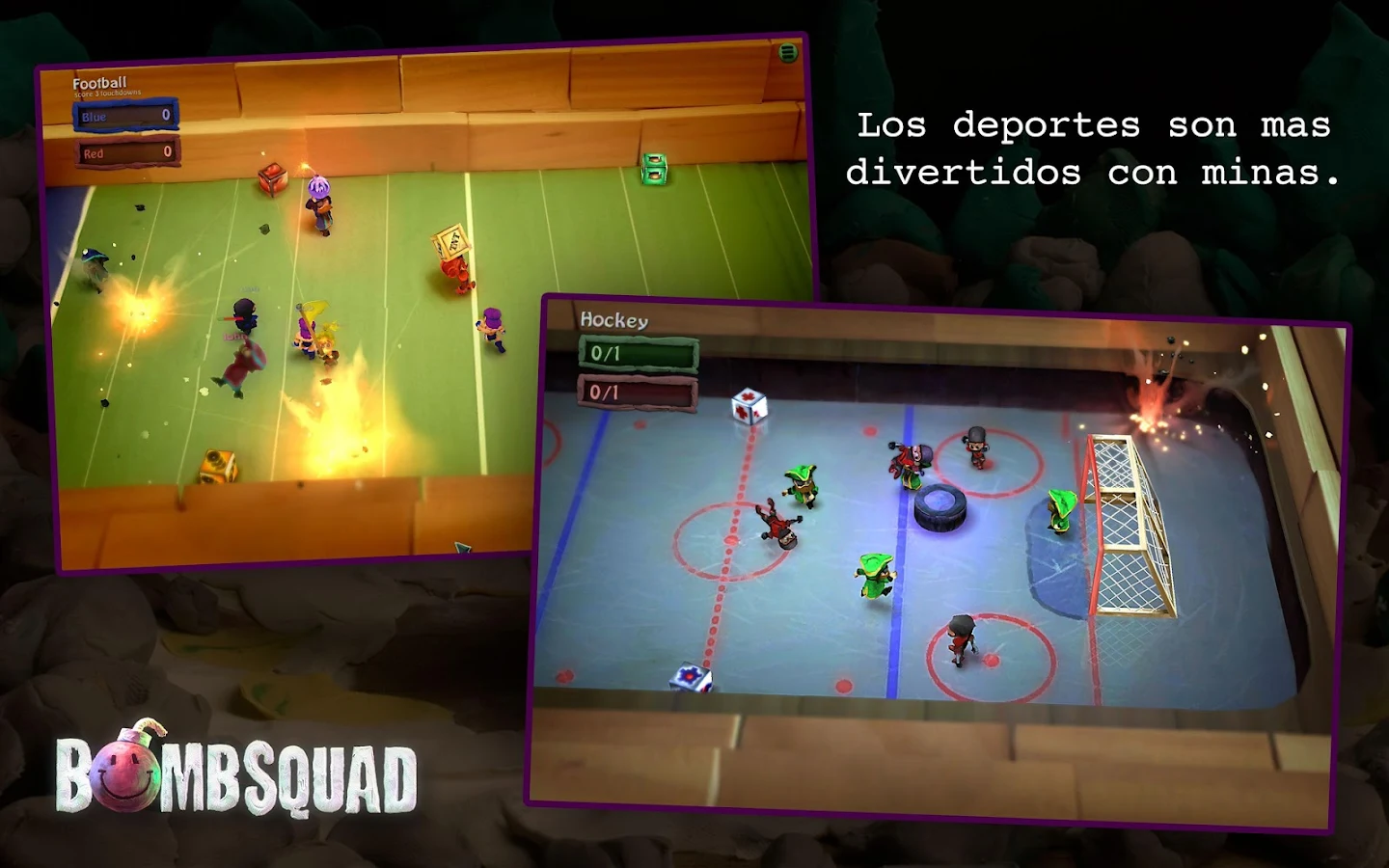
BombSquad PRO Edition v 1 4 94 Android
BombSquad PRO Edition v 1 4 94 Android
 BombSquad
Eric Froemling Acción


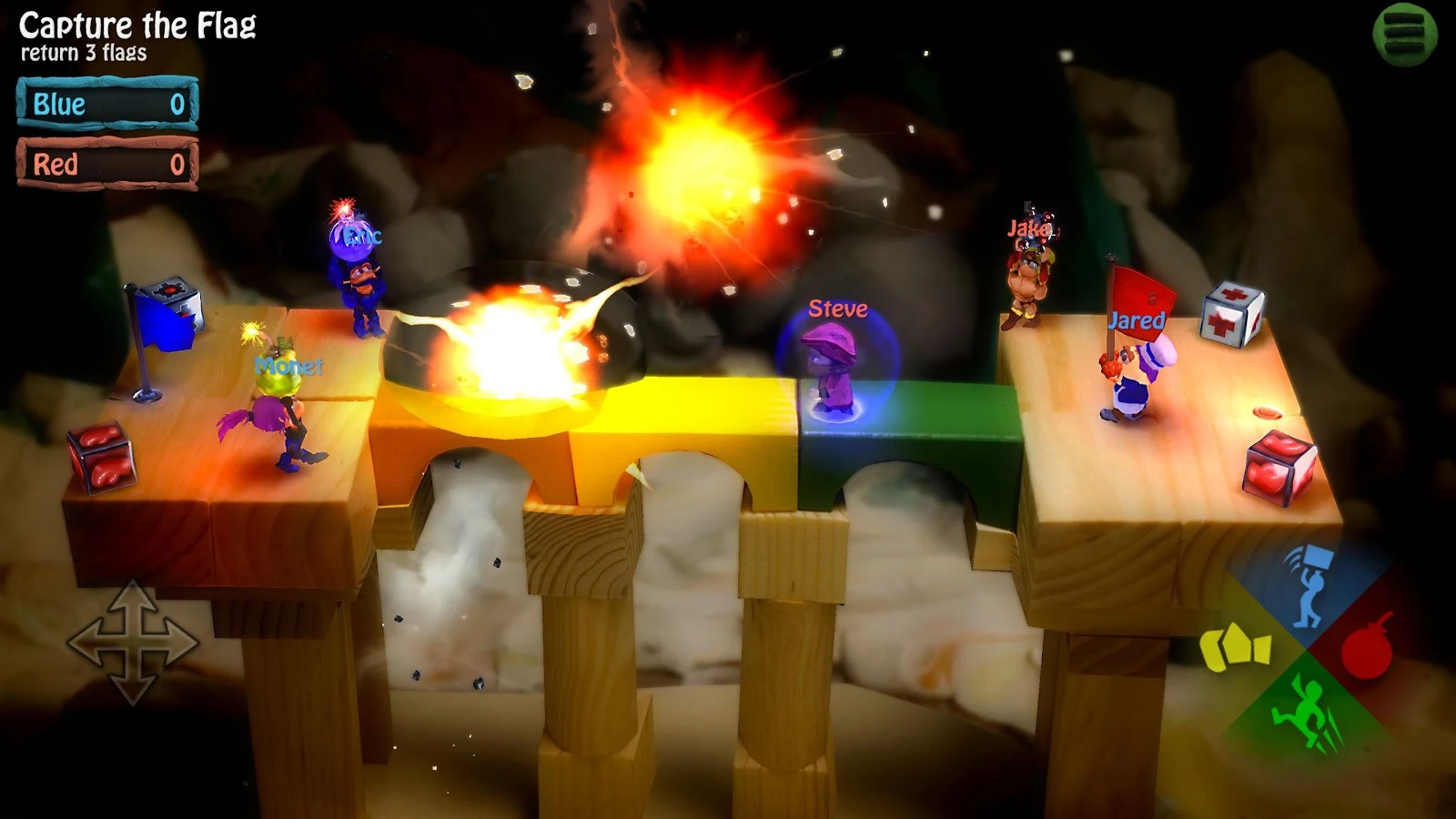
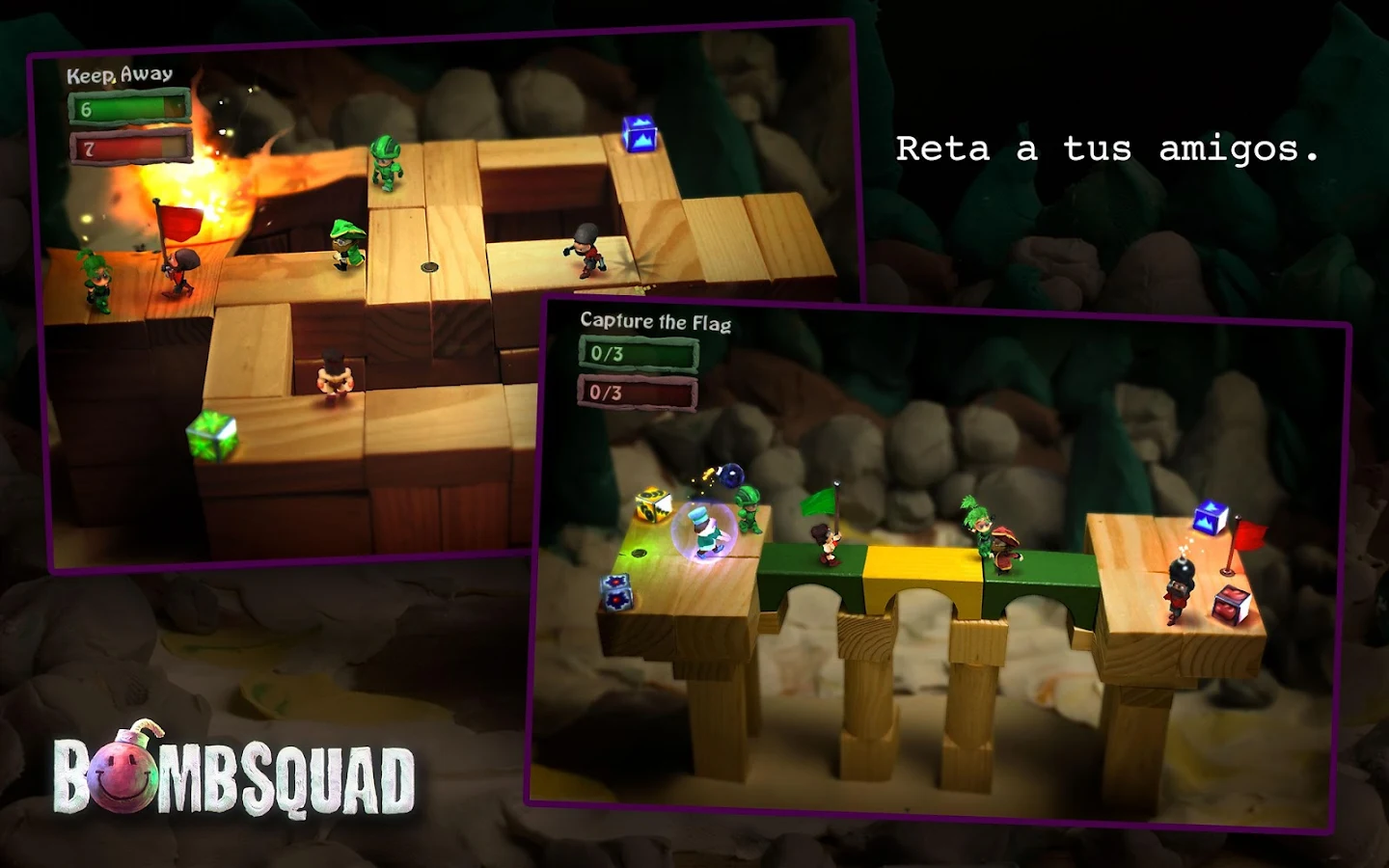
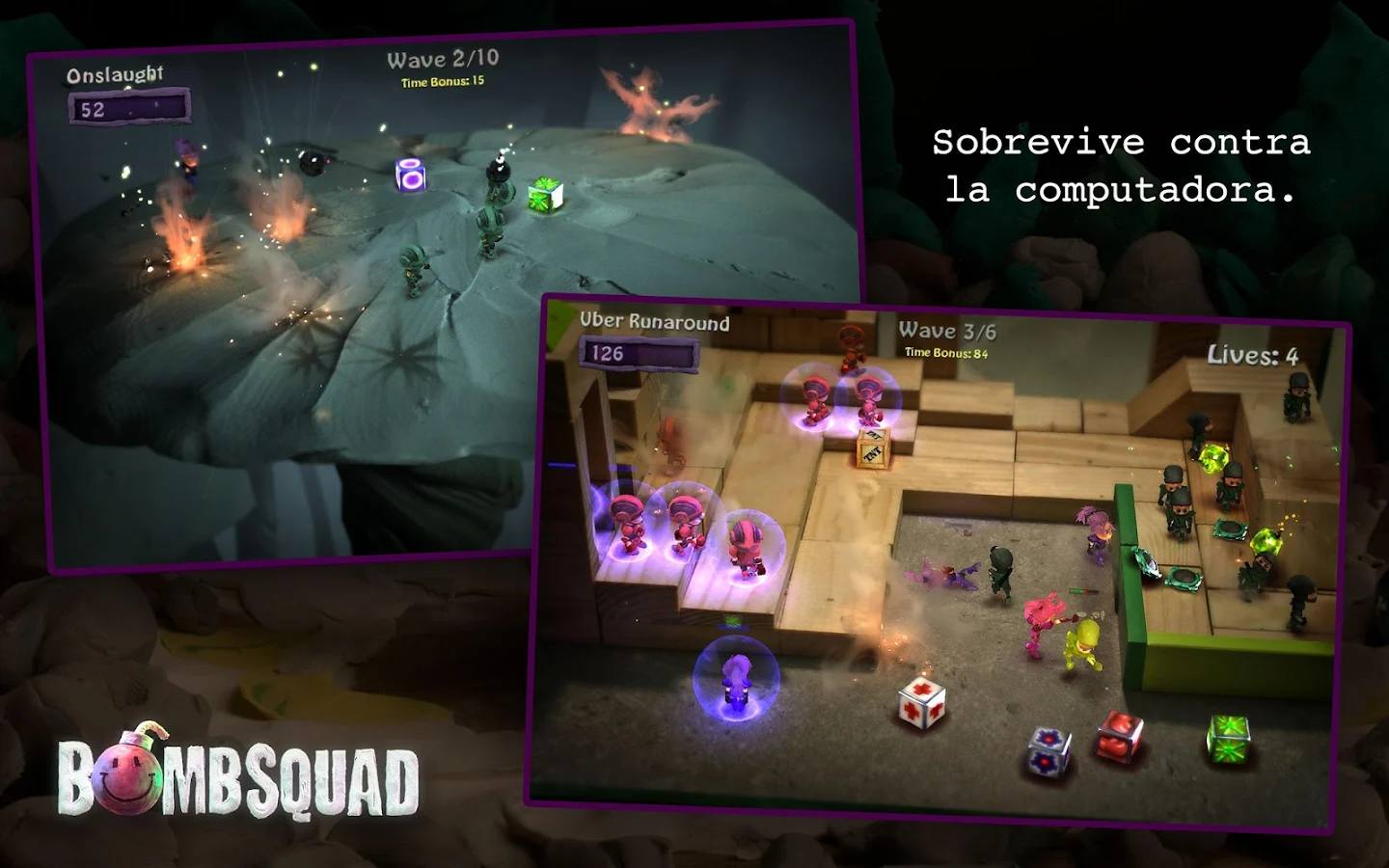
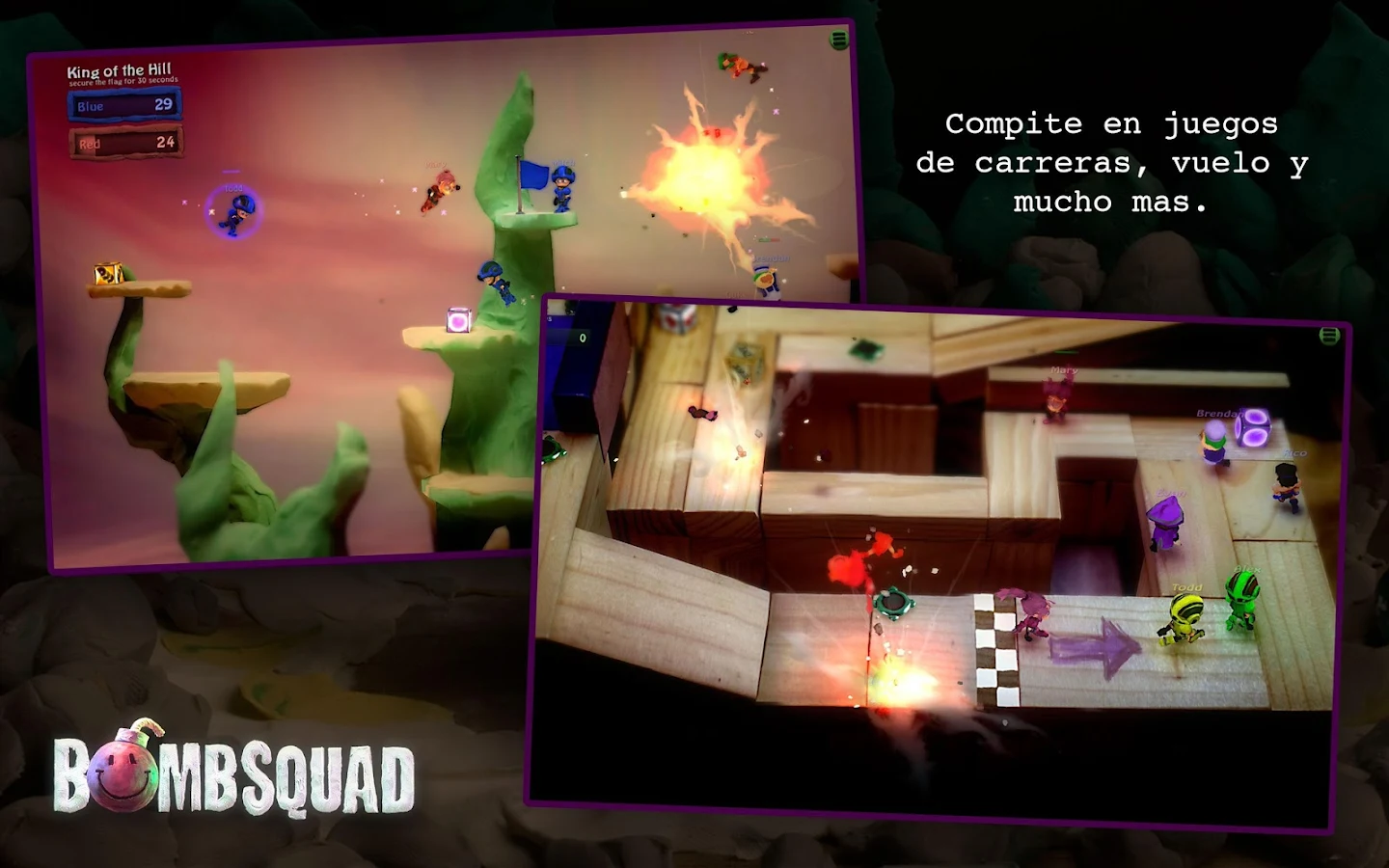
¡Juego en grupo de 8 jugadores!
¡Revienta a tus amigos (o a la computadora) en un torneo de mini-juegos explosivos como Captura la bandera, Hockey-bomba, y Combate mortal épico en cámara lenta!
Controles sencillos y un amplio apoyo de controles hacen que sea fácil que 8 personas entren en la acción, ¡incluso puedes usar tus dispositivos móviles como controles a través de la aplicación gratuita BombSquad Remote!
¡Bombardeo inminente!
????????????DESCARGA ????????????

Archivo Apk? MEGA

Archivo Apk ? MEDIAFIRE
[Compatibilidad] ?Play Store
Requiere Android ?4.0.3 y versiones superiores
????????????INSTRUCCIONES ????????????
•?Descarga el Archivo Apk
•?Instala el Apk
•?ABRE EL JUEGO Y DISFRUTA
????????????NO OLVIDES SEGUIME EN MIS REDES SOCIALES????????????
•? CANAL ACTIVO DE YOUTUBE ? http://goo.gl/AiZfG5
•? TWITTER ? http://goo.gl/cjUpgd
•?FACEBOOK ? http://goo.gl/69r3EZ
•? GOOGLE PLUS ? https://goo.gl/0j7Vvn
•? Mi BLOGSPOT ? http://goo.gl/xQulT9
Available link for download
Wednesday, May 17, 2017
Briefs Filed by Petitioner and His Amici in Bowman v Monsanto
Briefs Filed by Petitioner and His Amici in Bowman v Monsanto
In Bowman v. Monsanto, the Supreme Court will have the opportunity to address the extent to which the doctrine of patent exhaustion applies to progeny of patented recombinant seeds. For background on the case, see this previous post.
Here are links to briefs recently filed by petitioner Bowman and his amici, with some brief commentary:
Petitioner (Vernon Bowman) argues that an authorized sale of recombinant seeds exhausts patent rights in progeny seeds that were not themselves the subject of an authorized sale. He bases this argument on a theory that subsequent generations of seeds are "embodied” in the first-generation authorized seeds. Bowman is apparently attempting to leverage the Supreme Courts questionable use of the term "embodies" with respect to method patents in Quanta. He also argues that production of progeny seeds does not constitute "making" the seeds because the use of genetically modified seeds inherently results in the production of progeny seeds. Bowman contends that contract law provides adequate remedies to owners of patents on self-replicating technologies.
Center for Food Safety argues that extending patent exhaustion to progeny seeds will benefit farmers by curtailing Monsantos patent enforcement actions targeting farmers. The Center also claims that extending the patent exhaustion doctrine in this way will benefit scientific research and innovation in agriculture, and lower the cost of farming. The Center further contends the Federal Circuits decision is contrary to Quanta, and reiterates petitioners argument that producing progeny seed constitutes use of the patented seed, not making it, and hence falls within the scope of patent exhaustion. The amici voice is concerned that farmers whose fields have been "contaminated” by Monsantos patented seeds could be subject to infringement lawsuits.
The American Antitrust Institute argue that the Federal Circuits decision is contrary to Supreme Court precedent, particularly Quanta, and departs from long-standing Congressional patent policy. They warn that the Federal Circuits decision "portends dangerous unintended consequences" for other industries, particularly the computer software industry. They suggest that Monsanto should learn from the software industry, and engage in "effective product differentiation and efficient third-degree price discrimination" in order to counter the threat posed by the ease with which their products can be replicated. They contend that Monsanto could have avoided its need to rely on patents by not working with soybean seeds and other inbred seed lines, and confining their activities to hybrid seeds (i.e., corn) that do not produce true copies of themselves. Somewhat surprisingly, the Institute suggests that Monsanto "could have developed its ‘terminator’ gene, which would have rendered progeny seeds sterile." “Terminator” is a pejorative term for Genetic Use Restriction Technology (GURT), highly controversial technology that Monsanto pledged not to use in 1999.
The Automotive Aftermarket Industry Association et al. are concerned that affirmance of the Federal Circuits decision weakens the patent exhaustion doctrine. This brief was filed on behalf of companies that market automotive replacement parts and refurbished inkjet cartridges.
Knowledge Ecology International essentially argues that effective patent protection is not necessary for self-replicating genetically engineered crops, because "a plethora of alternative mechanisms to patent regimes exist to reward research and development." For example, they argue that an inventor "can still protect his investment through contractual agreements governing post-sale uses” (while at the same time acknowledging that contract law would not have helped in this case, due to a lack of privity between Bowman and Monsanto). The plethora of alternative mechanisms includes "sui generis systems of rewards or cash innovation inducement prizes," which KEI characterizes as "viable alternatives to the patent system." They voice concern that "even plants exhibiting the genetically modified trait found in the wild as a result of cross-pollination, would fall under the patent rights the patent holder.)
The Public Patent Foundation expresses concern that under the Federal Circuits ruling, "contaminated farmers are infringers," and "Monsantos customers routinely make and sell new infringing articles." In a previous post, I discussed a lawsuit that the Public Patent Foundation has filed against Monsanto on behalf of a variety of groups including associations of organic farmers.
Available link for download
Thursday, May 4, 2017
Billups Rothenberg v ARUP Genetic Testing Patents Found to Be Anticipated and in Violation of Lilly Written Description Requirement
Billups Rothenberg v ARUP Genetic Testing Patents Found to Be Anticipated and in Violation of Lilly Written Description Requirement
Robert Cook-Deegan and I filed an amicus brief in AMP v. US PTO (the Myriad gene patent case) essentially arguing that with respect to gene patents we should not throw out the baby with the bathwater. Some gene patents do appear overly broad and/or overly reaching, particularly in the context of genetic diagnostic testing, but these problematic patents are best addressed by means other than declaring all gene patents patent ineligible, which could have a substantial detrimental effect on biotechnology. For example, we pointed out that other doctrines of patentability, particularly the disclosure requirements of section 112 (written description and enablement) and the requirements of novelty and nonobviousness should be sufficient to address many if not all of the concerns associated with some gene patents. In Billups-Rothenberg v. ARUP, the Federal Circuit has just provided an illustration of what we were talking about, invalidating all of the gene patent claims that have been asserted against companies providing genetic diagnostic testing for mutations in the HFE gene, which are associated with hereditary hemochromatosis.
Gene patents have become quite controversial, based largely on a perception that they impose undue restrictions on the development and availability of genetic diagnostic testing. I have argued that the concerns have been overblown, in part because they assume that gene patent claims are extremely broad in scope (and thus difficult if not impossible to design around), when in fact if interpreted as broadly the claims would be highly susceptible to invalidation under a variety of patentability doctrines. Unfortunately, human gene patents have rarely been litigated in the context of genetic testing, there has been little case law to point to directly on point, and critics of gene patents have assumed the worst.
In fact, in a comprehensive survey of human gene patent litigation in the United States that I conducted in 2007, I found only a handful of lawsuits that had been filed asserting infringement of a human gene patent by a provider of genetic diagnostic testing services, and no substantive judicial decisions arising out of any of these lawsuits, owing to the fact that they all settled shortly after the lawsuit was filed. The Billups-Rothenberg lawsuit was filed shortly after I conducted my survey, and to my knowledge represents the only case in which the courts have actually reached a decision concerning an allegation that a human gene patent was infringed by genetic testing (in the Myriad case, Myriad has not alleged that any of the plaintiffs are infringing its patents)- it is certainly the first time the Federal Circuit has addressed the issue. Consistent with the point we were attempting to make in our amicus brief, the Federal Circuit invalidated the asserted human gene patents for violation of the written description requirement and for lack of novelty. This is a precedential opinion, and I think quite informative as to how the courts will address human gene patents that appear to claim more than was justified by the nature of the inventors discovery.
Written Description
The asserted claims of US patent 5,674,681 were all held to be invalid for violation of the written description requirement. Claim 2 is representative:
2. A method to identify an individual having or predisposed to having hemochromatosis, comprising the steps of:
providing from the individual a sample containing a gene encoding a nonclassical MHC class I heavy chain and
detecting a mutation in said gene, which mutation results in the reduced ability of said heavy chain to associate with said ?2 microglobulin, wherein the presence of said mutation identifies said individual as having or predisposed to having hemochromatosis.
As a sidenote, note that this claim explicitly requires providing a patient sample, and thus would only be infringed by an entity that obtained a physical DNA sample from a patient and analyzed it to detect a mutation in the gene. This sort of limitation appears in most gene patent claims, and is increasingly significant as we move toward whole genome sequencing, since it implies that these sorts of claims will not be infringed in situations where one entity sequences a patients genome and another entity (for example a doctor) analyzes the genetic data disease-related mutations. On the other hand, the Federal Circuits recent decision in Prometheus makes clear that a patent claim that could be infringed by merely analyzing genetic data, without physically manipulating DNA molecules, would be invalid based on patent ineligibility. This is part of the reason I believe that gene patents will become less of an issue as personal whole genome sequencing becomes established, and the analysis of DNA molecules becomes decoupled from the analysis of genetic information.
Like most written description decisions coming out of the Federal Circuit, the court is not entirely clear as to exactly why the claims failed the written description requirement, but I see two distinct bases before the courts decision. First, the court found that the specification does not demonstrate possession of the claimed subject matter, and that the inventors had "attempted to preempt the future before has arrived." In other words, the court invoked Lilly written description as a doctrinal "wildcard" (using the language of Judge Rader) to invalidate an "unworthy" patent claim, along the lines seen in cases such as Ariad and Rochester.
The court also based its decision on the failure of the patent to disclose the DNA sequence of the gene recited in the claims, citing Regents of UC v. Lilly and Fiers v. Revel. The patent discloses the general location of the gene in the human genome, but not its exact location, nor its DNA sequence, nor the sequence of any mutations.
The court made the important observation that "this case is like Regents and Fiers, in which the DNA sequences at issue were unknown in the art.” Prior to the Federal Circuits 2008 decision in Carnegie Mellon v. Hoffman-La Roche, it was my opinion that the only way to reconcile Federal Circuit decisions which invalidated patent claims under Lilly written description for failure to provide DNA sequence information from decisions that upheld the validity of claims failing to provide DNA sequence information was the distinction between previously known and unknown DNA sequences. If the heart of the claimed invention involved identification of a novel DNA sequence (Fiers, Regents of UC, In re Wallach, In re Kubin (a rare precedential BPAI decision), a strict interpretation of Lilly written description has been applied requiring adequate disclosure of DNA sequence. On the other hand, in cases where the heart of the invention involves a novel recombination or modification of a previously known DNA sequence, the court has not required to disclosure of DNA sequence (Amgen v. HMR, Capon v. Eshhar, Invitrogen v. Clontech, and Falko_Gunter Falkner v. Inglis).
In Carnegie Mellon v. Hoffman-La Roche, Roche made the entirely legitimate argument that Lilly written description only requires disclosure of DNA sequence in cases where the invention involves the discovery of a new gene sequence. Since the heart of the claimed invention in that case involved a novel recombination of genetic elements, not the discovery of a new genetic sequence, Roche argued (correctly in my view) that a disclosure of DNA sequence was not necessary to satisfy Lilly written description. But the Federal Circuit rejected Roches argument, and specifically held that the requirement for compliance with Lilly written description is the same regardless of whether or not an invention is based upon discovery of the new genetic sequence. I thought this was a poor decision, because without that distinction I dont know how you make sense of the disparate outcomes in the previous Federal Circuit written description decisions.
In Centocor, decided earlier this year, the Federal Circuit explicitly held that the requirement for compliance with Lilly written description does depend upon whether or not invention involves a newly discovered molecule. I would say this was the only way it could reconcile its decision to invalidate Centocors antibody claim for failure to provide adequate disclosure of structure, while running into direct conflict with Noelle v. Lederman, which held that a broad claim directed to antibodies can comply with Lilly written description in the absence of any structural description. Of course, this seems irreconcilable with the court’s statement in Carnegie Mellon that it is irrelevant whether or not the invention involves discovery of a new molecule.
The decision in Billups-Rothenberg adopts the Centocor approach, by emphasizing the distinction between claims directed towards DNA sequences known in the art versus other claims directed towards DNA. I think this distinction is critical in any attempt to reconcile Federal Circuit decisions involving Lilly written description, with the caveat that the Carnegie Mellon University decision is an outlier.
The Billups-Rothenberg decision is I think also illustrates how courts can use the written description requirement to invalidate gene patent claims that seem to be overreaching. For example, even if the patent had disclosed the gene sequence, I can imagine a court invalidating a claim broadly directed towards methods of identifying mutations in the gene for failure to satisfy Lilly written description, because the specification fails to evidence "possession" of all the mutations that might be linked to disease, and because the specification fails to identify the sequence of specific mutations linked to disease.
Novelty
The other patent asserted in the case, US patent number 6,355,425, was found to be invalid based on anticipation by one of the defendant’s patents, 6,025,130. The ‘425 patent claim the method for diagnosing hereditary hemochromatosis by determining the presence of a mutation in exon two of the HFE gene. The patent apparently covers diagnostic testing for the S65C mutation, which has been correlated with the hemochromatosis. The defendants test for this mutation.
The prior art ‘130 patent discloses the S65C mutation, but also states that presence of the mutation in patients "shows no increase in risk of acquiring [hereditary hemochromatosis] and thus may only be a polymorphic variant within the population." In other words, while the prior art patent apparently discloses testing for the S65C mutation, it also explicitly acknowledges that the inventors had not identified any basis to infer that identification of the mutation would be useful for diagnosing risk of hemochromatosis, and thus failed to disclose any practical utility for testing for the mutation.
Billups-Rothenberg argued that prior art disclosing only “a clinically insignificant polymorphism unrelated to disease” did not constitute an anticipatory reference to a claim directed towards a method of testing for the mutation in order to diagnose for disease risk. However, the court rejected this argument, and basically held that the mere disclosure of the mutation and a method of testing for it was sufficient, regardless of whether the reference disclosed a practical utility in testing for the mutation. The court also stressed that disclosure appearing in an issued patent is presumed to be enabled.
This aspect of the decision reminds me of In re Gleave, discussed in an earlier post. The approach adopted by the Federal Circuit in these decisions could have significant implications for the patentability of newly discovered genetic mutations. For example, suppose a researcher identifies a mutation in a known gene of clinical significance, such as correlation with disease. I can imagine a court extending the logic of Billups-Rothenberg and Gleave to conclude that a prior art patent disclosing the gene sequence, and perhaps stating that one could test the gene sequence for mutations, is anticipatory prior art, even though the patent does not disclose the mutations later discovered to be correlated with disease.
Available link for download
Monday, April 17, 2017
Block City Wars skins export v 6 1 1 Todo Infinito Android
Block City Wars skins export v 6 1 1 Todo Infinito Android
 Block City Wars
D-Games Apps Simulación

Bienvenido a la manzana!
Bienvenido a la gran mundo abierto donde va la guerra de verdad! escaramuzas constantes entre mafiosos y policías, golpes, la mafia y la policía - que es el bloque? ity Wars acerca.Completar misiones imposibles, conducir coches frescos, parkour, destruir enemigos diferentes (incluso zombies y monstruos de enojo) o simplemente haces lo que quieres hacer! Salida shooter en tercera persona en las grandes megalópolis con altos altos rascacielos y base militar. Jugar en el modo multijugador en el mapa grande con tus amigos!
Principales características:
- Los modos en línea: Zona de pruebas y PVP Deathmatch
- El modo de un solo jugador - Aventura! Tome Jobs y misiones, pasarlos y agarrar dinero en efectivo!
- Megalópolis enormes con varios distritos 10 - mapas PVP: Ciudad vieja, puerto, ciudad de China, la base militar y otros.
- Juega con tus amigos de todo el mundo (usar el chat en línea)
- Unidad de temperatura en los automóviles, el vuelo a través de paquete del jet y helicópteros!
- Participar gran asalto de disparos con tanques y AP?!
- Gran variedad de armas y armas de fuego: M16, Ak47, ametralladora, rifle de francotirador, RPG, cuchillos, Katana y muchos más!
- Uso de la sala héroe para elegir uno de los skins personalizados. Elige la piel o pieles favorito y luchar!
- Gráficos de píxeles impresionantes con luz dinámica.


????????????DESCARGA ????????????
Archivo Apk? MEGA
Dattos? MEGA
[Compatibilidad] ? PLAY STORE
Requiere Android ? 2.3.3 y versiones superiores
????????????INSTRUCCIONES ????????????
•?Descarga el Archivo Apk
•?Instala Ojo pero no lo Abras
•?Descomprime el otro archivo Dattos
•?Copia la Carpeta a la Ruta Android/obb/aquí, si no esta obb la creas con Minúsculas
•?ABRE EL JUEGO Y DISFRUTA
????????????NO OLVIDES SEGUIME EN MIS REDES SOCIALES????????????
•? CANAL ACTIVO DE YOUTUBE ? http://goo.gl/AiZfG5
•?TWITTER ? http://goo.gl/cjUpgd
Read more »
Available link for download
Subscribe to:
Posts (Atom)